
 Written by Pop, an active Wordscapes player and the editor of Solving Wordscapes. Data study, published August 2026. Every number in this article comes straight from the game’s own level data, checked by hand.
Every Wordscapes player knows the moment. The board slides in, the banner says super hard level, and the coins on offer suddenly look like danger pay. What nobody seems to know is how many of these levels exist, where they hide, or what they actually have in common.
So I counted. All of them, nearly all of them.
I went through the level data for the entire game: 6,000 main levels plus 6,000 master levels, and since every master level ships in two different versions, that comes to 18,000 individual boards. This article is what those levels reveal.
- The key findings in 30 seconds
- The headline numbers
- The hardest stretch of the game is not where you think
- The rare letter myth
- What super hard boards actually have in common
- The dictionary problem
- Master levels: your level 8,432 is not my level 8,432
- So why is a level probably flagged super hard?
- The grids are a retention machine
- Eight years later, Google still agrees with the flags
- The community checks my homework
- Methodology and data
The key findings in 30 seconds
- Only 7.2% of all 18,000 boards are marked super hard. By its own flags, Wordscapes is easy 81% of the time.
- The hardest stretch is levels 501 to 1,000, not the late game. By levels 5,501 to 6,000 the super hard rate collapses to 2.6%.
- Desert, levels 721 to 800, is the hardest pack in the game: one level in four is flagged super hard.
- The rare letter myth is backwards. Z, J, Q, X and W show up more often on easy boards than on super hard ones. The real killer letter is V.
- Super Hard boards do not starve you, they drown you: a third of your correct words land in the bonus jar instead of the crossword.
- 92% of super hard boards demand at least one word most people have never used, like ROIL or SCREE.
- Past level 6,000, every master level exists in two versions, and on 749 of them one player’s version is super hard while the other’s is not.
- Google agrees with the flags: the levels Google itself surfaces in related searches are flagged at nearly double the expected rate, and past level 300, five of the six that break through carry a flag.
- r/wordscapes moderators nominated killer words from memory, and the data crowned one of them: CALICO is required on 17 boards, flagged super hard all 17 times.
- Hard and Super Hard are the same recipe at two doses, and the most recycled super hard board in the game, 18 appearances and 18 flags, literally spells CHRONIC.
The headline numbers
| Difficulty flag | Boards | Share |
|---|---|---|
| Easy (0) | 14,615 | 81.2% |
| Hard (1) | 2,084 | 11.6% |
| Super Hard (2) | 1,301 | 7.2% |
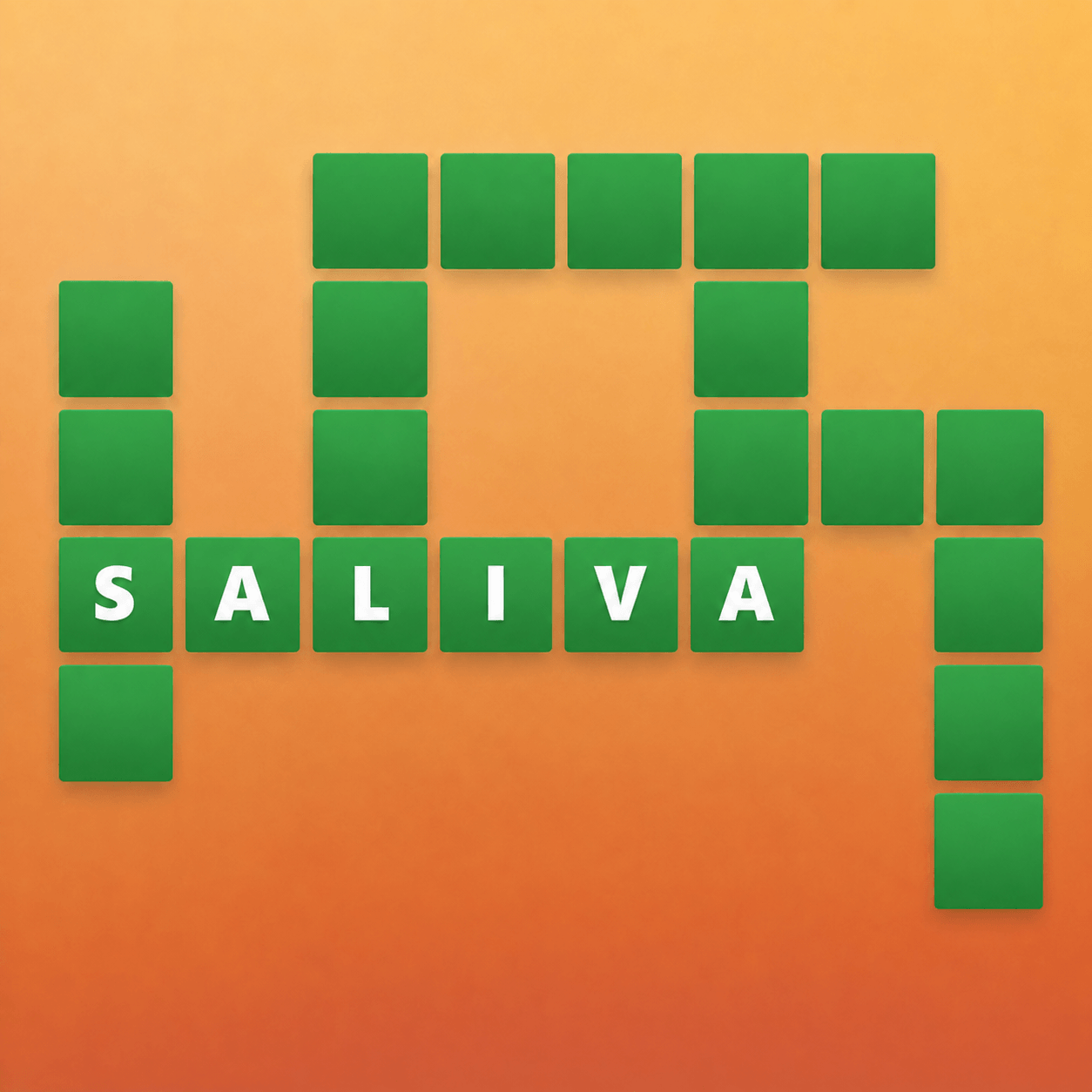
By its own accounting, Wordscapes is an easy game 81% of the time. Roughly 1 board in 14 is flagged super hard. On the main journey from level 1 to 6,000, that means 410 super hard levels total, and you meet the first one at level 85, a six letter board whose big answer is SALIVA. The first hard level shows up much earlier, at level 14, before most players even know the game is grading them.
Those averages hide the real story, though. Super Hard levels are not spread evenly. Not even close.
The hardest stretch of the game is not where you think!
I expected difficulty to climb steadily toward level 6,000. The data says the opposite. The brutal zone is levels 501 to 1,000, where 16.4% of levels are flagged super hard and another 16% are flagged hard. In that stretch, one level in three carries a warning flag. By levels 5,501 to 6,000, the super hard rate has collapsed to 2.6%. Late game Wordscapes is, statistically, the gentlest part of the whole journey.
Here is that entire arc on one chart, before we zoom into the packs that cause it.
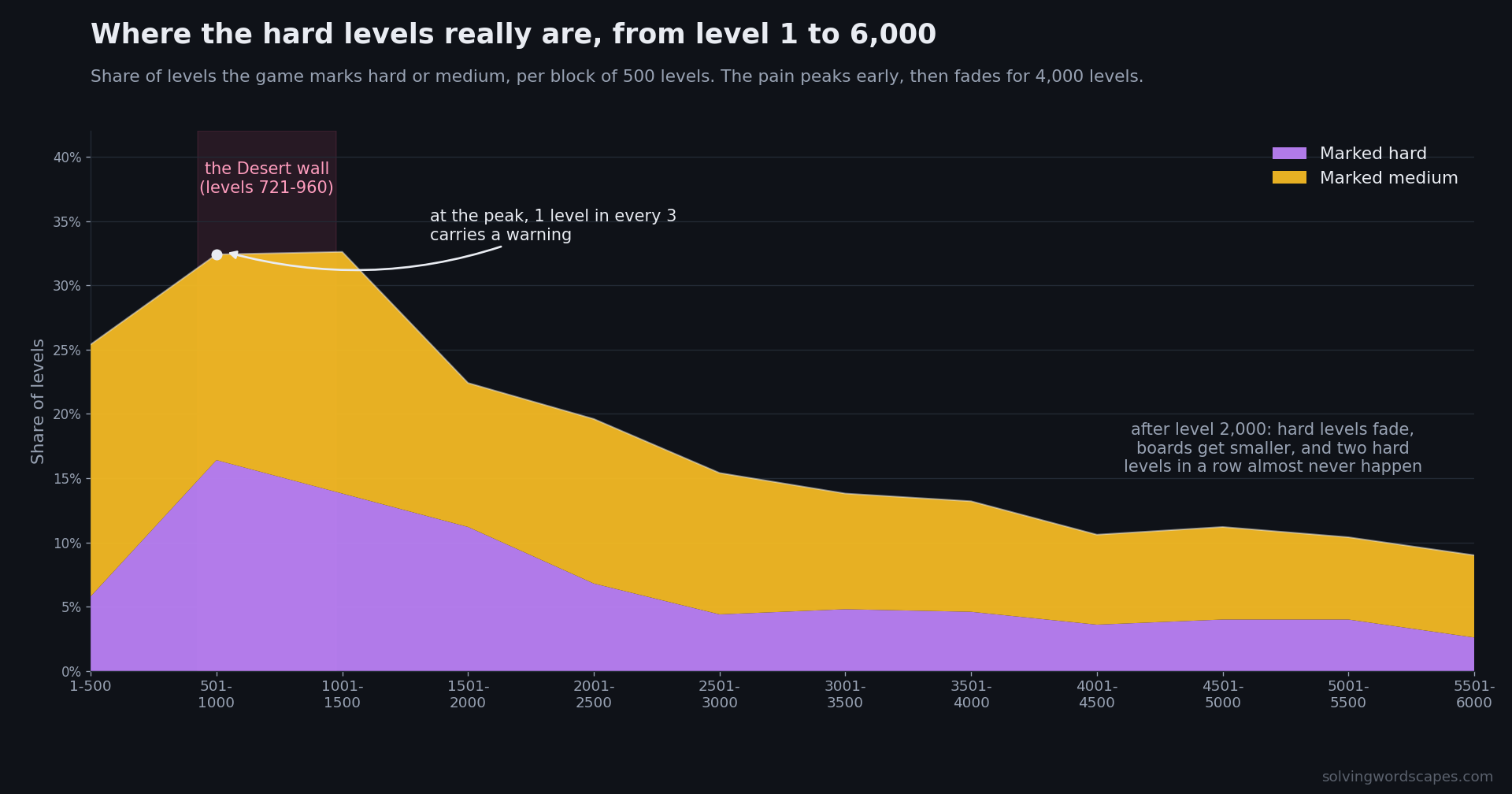
Zoom in and it gets more specific. The single hardest pack in the game is Desert, levels 721 to 800, where 19 of 80 levels are flagged super hard. That is 23.8%, one in four. Desert flows directly into Ocean (22.5% super hard) and then Field (21.2%), which means levels 721 to 960 form a continuous 240 level wall where more than a fifth of everything you touch is flagged super hard. If you have ever felt like the game turned on you somewhere in the 700s, you were not imagining it.
| Pack | Levels | Super Hard levels | Super Hard rate |
|---|---|---|---|
| Desert | 721-800 | 19 | 23.8% |
| Ocean | 801-880 | 18 | 22.5% |
| Cliff | 1121-1200 | 17 | 21.2% |
| Field | 881-960 | 17 | 21.2% |
| Outback | 1521-1600 | 16 | 20.0% |
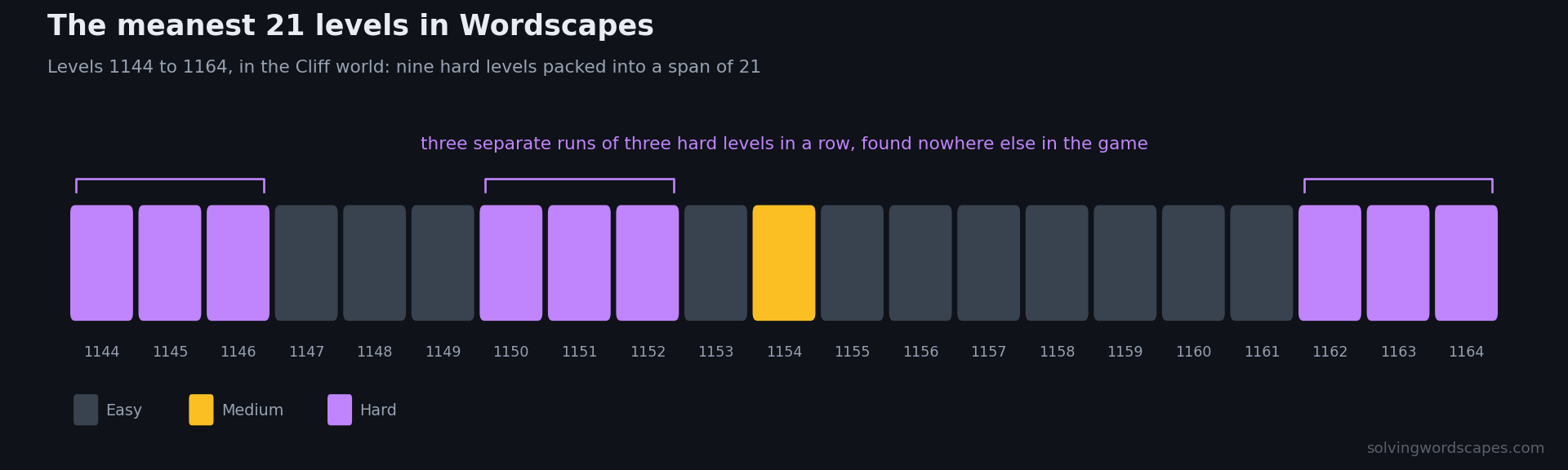
The nastiest micro zone sits inside Cliff. Between levels 1144 and 1164, a span of just 21 levels, you hit nine super hard flags, including three separate runs of three super hard levels in a row. Nowhere else on the main journey does that happen even once. Desert holds a different record: levels 780 to 784 are the longest stretch of the main journey with no easy level at all, five straight boards flagged hard or worse.
The rare letter myth
Ask players what makes a level super hard and most will say the same thing: bad letters. A Q, a Z, a J, an X. It sounds right. It is also completely backwards.
Z appears in 2.3% of easy boards and only 0.7% of super hard ones. J shows up in 1.8% of easy boards versus 0.5% of super hard boards. W is the most lopsided of all: 7.9% of easy boards contain one, against just 1.5% of super hard boards. Q, X and K all lean the same direction. The scary letters are, on the evidence, a gift. They lock down the board fast because so few words can use them, and once you spot QUILT or ZEBRA the rest falls into place.
One letter breaks the pattern, and it is not one anybody complains about. V appears in 12.3% of super hard boards but only 7.3% of easy ones. V is common enough that you expect words everywhere, awkward enough that most of them do not exist. It is the quiet killer of the Wordscapes alphabet.
What super hard boards actually have in common
Once you line up all 1,301 super hard boards next to the easy ones, the real profile emerges, and it has nothing to do with exotic letters.
First, size. 13.2% of seven letter boards are flagged super hard, versus 2.7% of six letter boards. Nearly five times the rate. Second, vowels. Super Hard boards run 41% vowels on average against 37% for easy boards. Third, repetition: 75% of super hard racks contain a duplicate letter, compared with 67% of easy ones. Lots of letters, lots of vowels, a doubled letter somewhere. That combination produces the specific misery Wordscapes specializes in: a rack where almost everything looks like it should be a word.
Which leads to the cruelest stat in the whole dataset. Super Hard boards are not stingy with valid words. They are drowning in them. A super hard board accepts 19.7 valid words on average (13.2 required plus 6.5 bonus), while an easy board accepts 16.3. The problem is that a third of your correct answers go into the bonus jar instead of the crossword. Level 1,071 in Vista is the purest example I found: the rack is S, S, N, U, L, A, E, the board needs 12 words ending in SENSUAL, and there are 24 other perfectly valid words that earn you nothing but a coin sound.
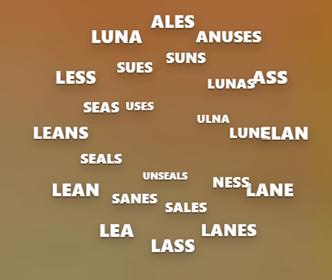
Two thirds of everything you can legitimately spell on that board does not help you finish it.
Super Hard levels do not starve you. They gaslight you.
The dictionary problem
Then there is the vocabulary itself. I scored every required word against the open wordfreq ( open source library ) frequency data, which ranks words on the Zipf scale ( a logarithmic measure of how frequently a word is used ) from everyday language down to words you may see once a decade. 92% of super hard boards demand at least one genuinely obscure word, and the average super hard board demands two or three. Across all super hard levels, that adds up to 525 distinct obscure words, and these are not optional bonus finds. The boards will not complete without them.
To make that concrete, here are some of those required words placed on the same scale as the English you actually speak.
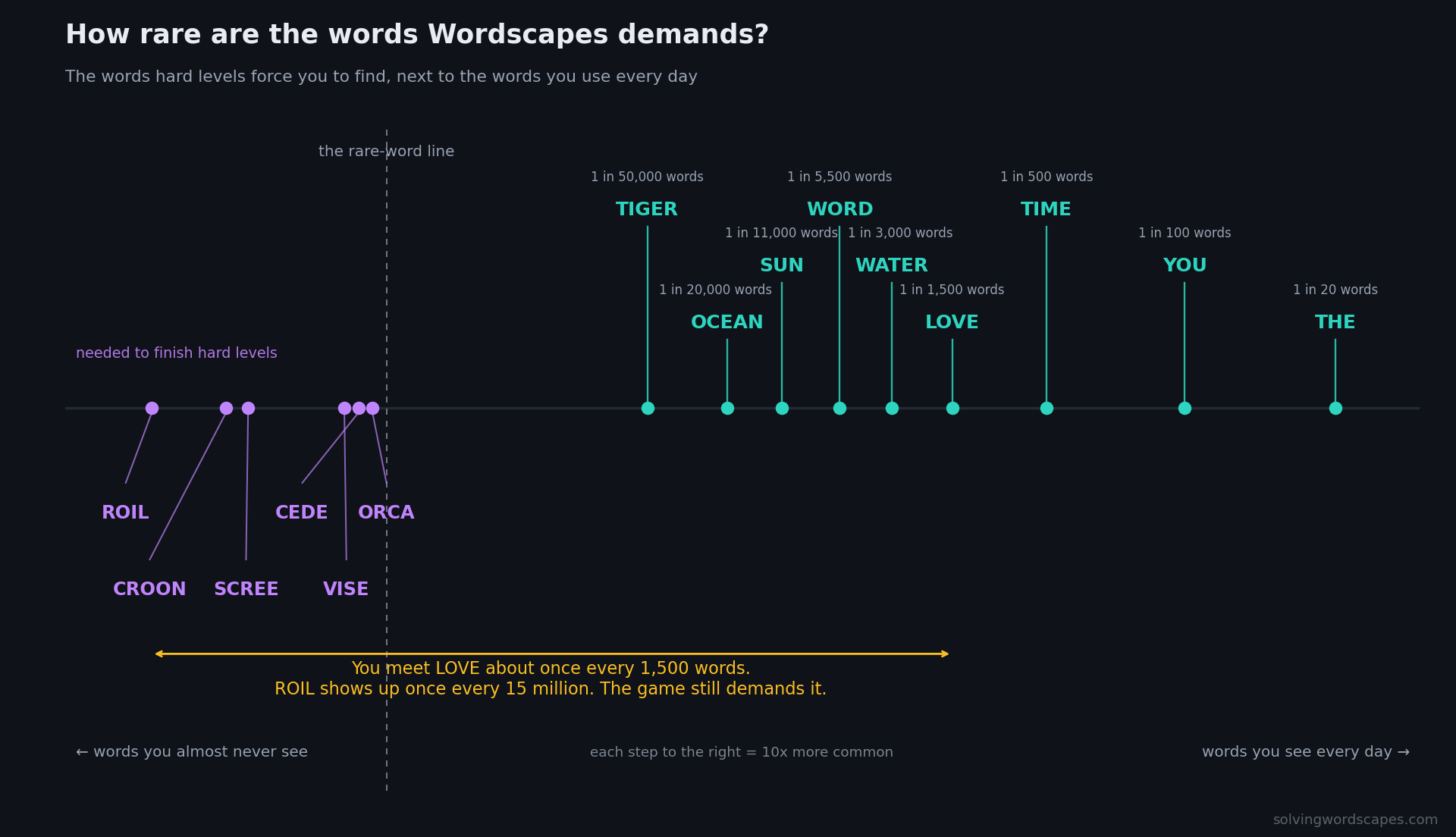
And it is rarely just one of these per board.
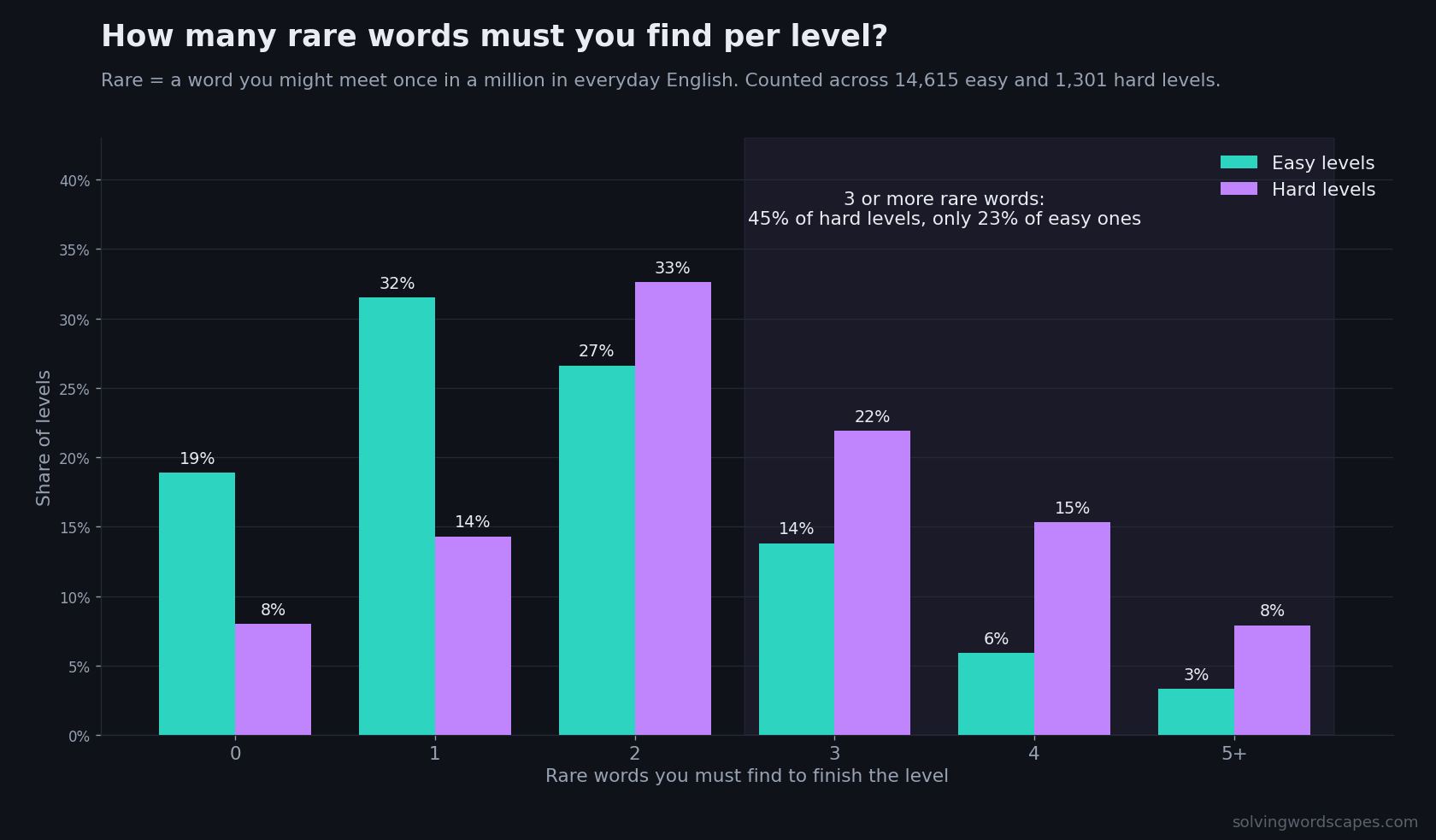
How many rare words a single level forces on you: nearly half of super hard levels demand three or more, twice the rate of easy levels.
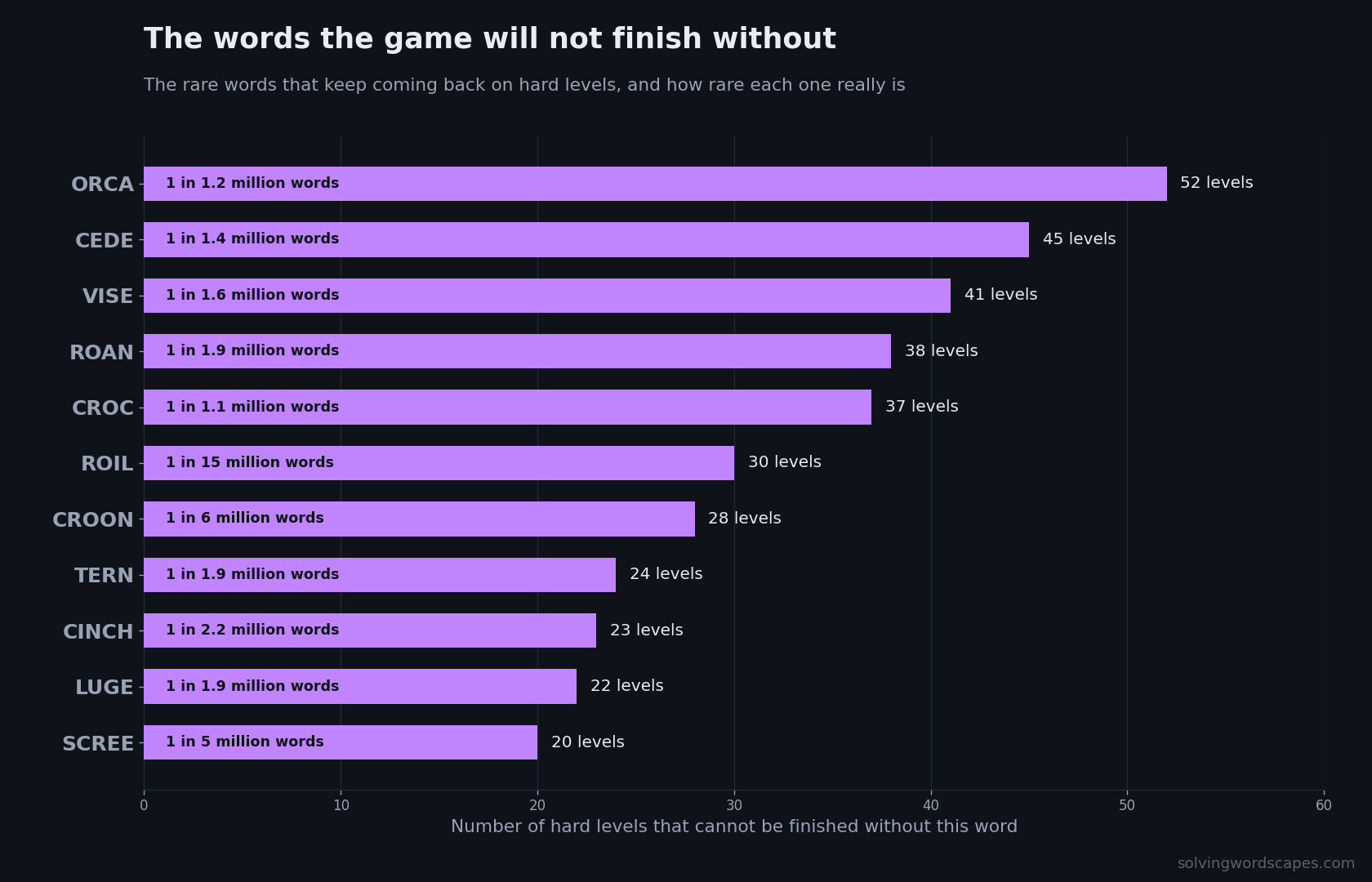
Some repeat offenders, with the number of super hard boards that require them: ORCA (52), CEDE (45), VISE (41), ROAN (38), CROC (37), ROIL (30), CROON (28), TERN (24), CINCH (23), LUGE (22), SCREE (20). If you have ever stared at a nearly finished board muttering that ROIL is not a word, the data confirms you have plenty of company, thirty boards worth.
The opposite frustration, swiping a perfectly valid word the game refuses to count, now has its own study of the words the Wordscapes refuses, and the two lists live on the same boards.” Ancres en milieu de phrase, une par page, conformes.
Here is that hall of fame as a chart, with each word translated into how often you would actually meet it in the wild.
My favorite single case is level 4,548 in Tower. To finish it you must play both BAM and BAS. BAS. The game will happily reject dozens of reasonable attempts while waiting for you to type a word that barely qualifies as one.
Master levels: your level 8,432 is not my level 8,432
Past level 6,000, Wordscapes quietly becomes two different games. Every one of the 6,000 master levels in the data ships in two versions, different racks, different answers, and which one you get depends on your install. For 28.6% of master levels, the two versions do not even agree on difficulty. On 749 of them, one player faces a super hard flagged board while the other’s board carries a lesser flag or none at all, and on 580 the contrast is total: super hard on one install, not even a banner on the other. If your teammate swears level 9,200 was nothing and it just ate twenty minutes of your life, you may both be right.
The game also recycles boards heavily back there, and my favorite discovery in the entire dataset is this: the rack S, O, I, D, U, V, E, whose seven letter answer is DEVIOUS, appears ten separate times across the main and master catalogs in this exact shuffle order, flagged super hard all ten times. The same seven letters also ship in a second order with a different layout, five more appearances, flagged hard at every one. Fifteen appearances, never once easy. In the first version of this study I crowned DEVIOUS the most reused super hard board in the game. The community review at the bottom of this page proved me wrong, and the real record holder turns out to be even better named. Somewhere, a level designer is smiling.
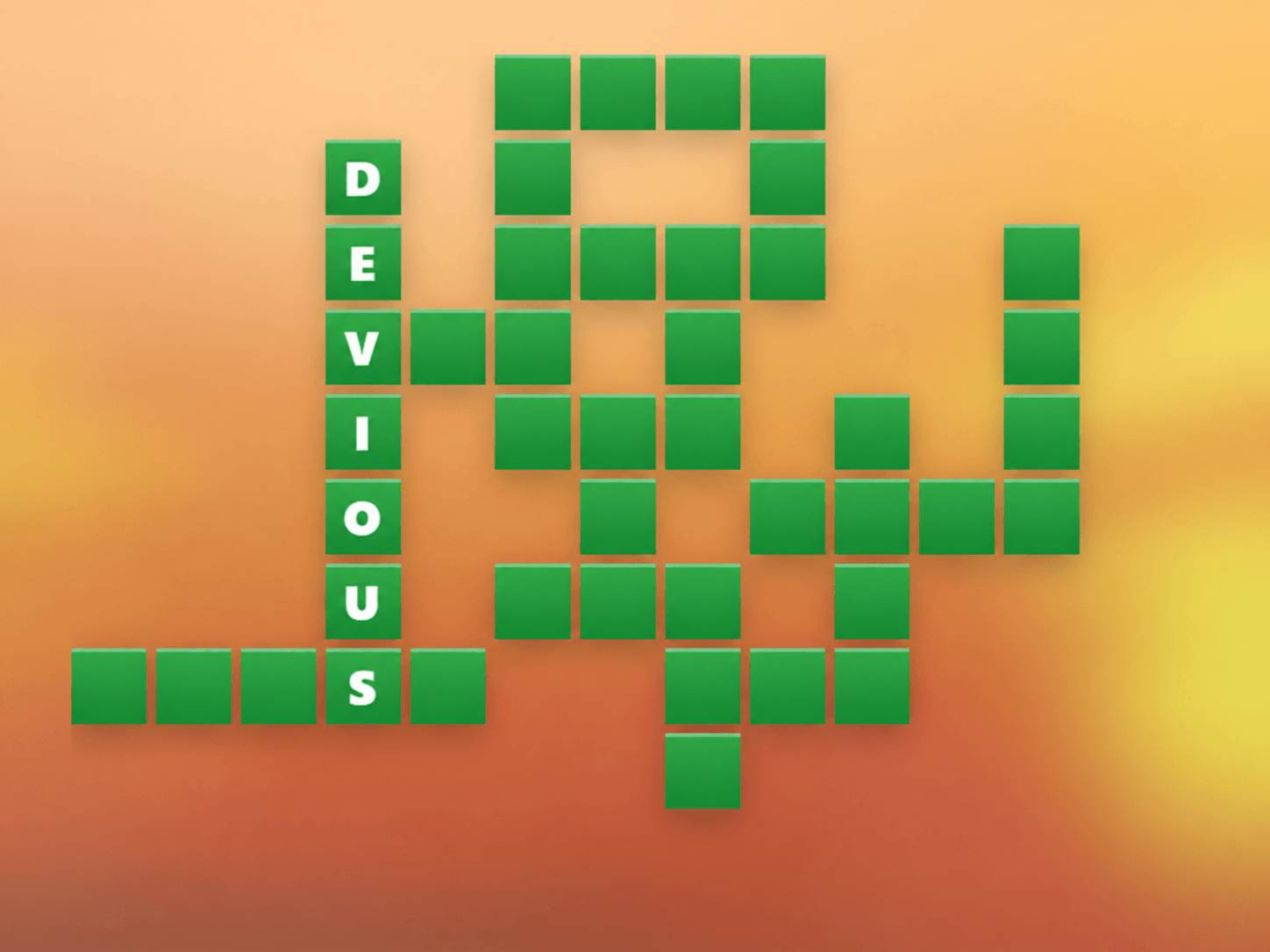
Look closely at the edges of that grid and you can see why this board earns its flag every single time it appears. The two rarest words on it are not woven into the crossword. They are parked at the extremities, each holding on to the rest of the puzzle by exactly one letter. DOUSE, a 1 in 2.6 million word, clings to the final S of DEVIOUS. VISE, our hall of famer from earlier, touches the board only through the E of DIVE. Crossing letters are how you normally back into a word you do not know, and these two barely give you any. You either know DOUSE, or you shuffle until the hint button starts looking reasonable.
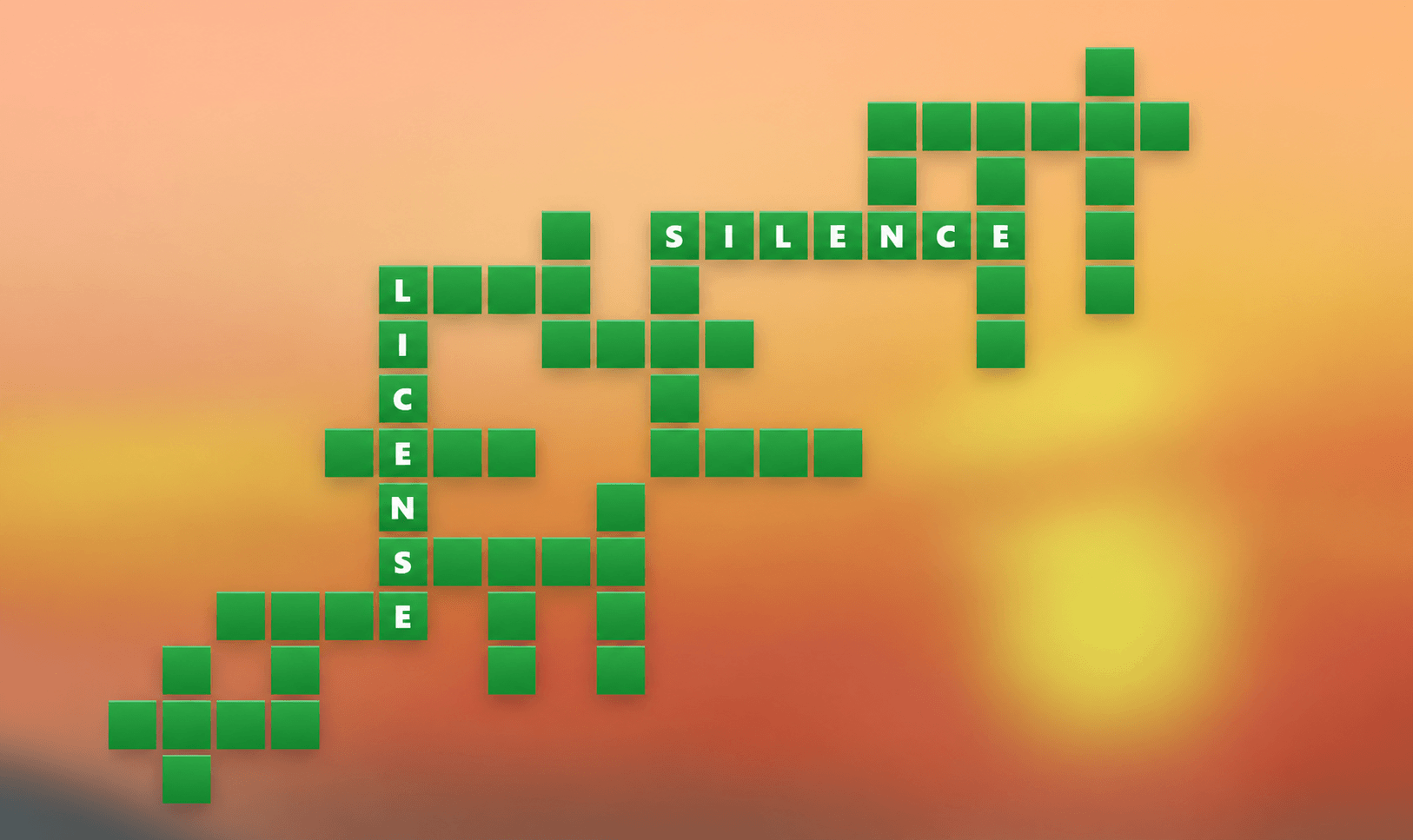
While I was digging through the recycled boards, I also stumbled on the strangest grid in the entire game. The rack S, N, I, E, L, E, C spells both LICENSE and SILENCE, and the board demands both. To fit its 19 words, the layout sprawls diagonally across a 20 by 14 area, by far the largest footprint of any board, and only 23% of that area is actually filled. It looks less like a crossword and more like a staircase built by someone who kept changing their mind. This giant layout appears 7 times across the catalogs, plus once more in a smaller 18 by 12 arrangement, and the rack carries a hard flag at all 8 appearances.
Recycling cuts the other way too. 2,650 letter racks appear at more than one level, and 497 of them switch difficulty flags between appearances, easy in one spot, super hard in another, because the required crossword layout changed even though the letters did not. Same rack, different trap.
So why is a level probably flagged super hard?
PeopleFun has never published its criteria, so everything from here is my best reading of the evidence, clearly labeled as such.
Start with what the flags physically are. Each board carries a single fixed difficulty value baked into the level data itself. And the main catalog these flags sit in has not moved in years. Veteran players remember the game’s early era, when PeopleFun was still actively reworking the boards; the changelogs of the old answer sites are full of “updated answers for all levels” entries through 2018, back when the catalog was still being reshaped and extended. Then it settled at 6,000 levels and froze. Whatever produced these flags happened once, back in that era, and shipped.My study of the Wordscapes daily puzzle calendar shows the Daily plays by a different rulebook entirely, with its own separate flag system that behaves nothing like these level flags.
So the flags are not a live reading of today’s players. They are closer to a fossil record of how players struggled seven or eight years ago. They do not look hand assigned either: no formula on letters alone explains why 497 identical racks flip between easy and super hard depending on layout, while the DEVIOUS board stays super hard at all ten of its appearances. The most plausible story is a one time calibration against real behavior, whether early player data or PeopleFun’s own playtesting: how long a board took, how many shuffles, how many hints, how many people simply quit. Every structural pattern in this study fits that reading. Seven letter racks with extra vowels and a duplicate generate huge guess spaces. Fat bonus lists mean your correct words constantly fail to advance the board. One or two dictionary deep cuts sit in the required list like landmines. Each factor stretches solve time, and stretched solve time, measured once and frozen forever, is probably what earned the flag.
The grids are a retention machine
There is a second layer here, and it is about design rather than measurement. PeopleFun’s own FAQ says the puzzles get larger and more difficult as the game progresses. That is true for about the first thousand levels. After that, the grid data tells a different story, and the shape of it looks deliberate. Read the catalog end to end and it behaves like a retention curve drawn in crossword squares, in three distinct zones.
Levels 1 to 500 are a tutorial that never admits it is one. Seven letter racks barely exist there, just 1.2% of boards, and super hard flags sit at 5.8%. But hard flags peak in this zone at 19.6%, the highest of the entire game. The design teaches you to struggle in small doses without ever putting up a wall. Friction, but no filter.
Levels 501 to 1,500 are the filter. The moment you cross level 500, seven letter racks jump from 1.2% of boards to 43%, and the super hard rate more than doubles to its all time peak. This is Desert, Ocean, Field, Cliff. In free to play terms this is the commitment test, the stretch where a player either learns to grind, starts spending coins on hints, or leaves. It is no accident that the game’s entire supply of back to back super hard levels lives here.
From level 2,000 on, the grids switch sides. Whoever is still playing at that point is the game’s most valuable audience, and the catalog stops testing them. The super hard rate falls to between 2.6% and 4.8%. The racks themselves physically shrink: seven letter boards drop from roughly half of all levels to 36% after level 3,500, which is a structural choice, not a flag. Super Hard levels stop clustering entirely. Across the final 4,000 levels of the main journey, two super hard levels in a row happens exactly once, at 3,887. And the pacing turns into pure tension and release: game wide, the level after a super hard one is easy 88% of the time, but past level 2,000 it is 96%. Every spike is followed by a breather, almost without exception.
Part of the late game softness may be mechanical. If the flags were calibrated on real players, the only people generating data at level 4,000 were the strongest ones, so fewer boards ever crossed the threshold. But the rack shrink after 3,500 cannot be a measurement artifact. Someone chose smaller boards for the long haul players. Before level 1,500, the grids keep asking whether you are staying. After level 2,000, they stop asking anything. They just keep you moving.
Eight years later, Google still agrees with the flags
If the flags really are a fossil from the game’s early era, there is a fair question to ask: do they still mean anything today? Google answers that one for free. Google Trends publishes the queries most closely related to any search, so I pulled the related list for “wordscapes puzzle” in the United States, covering the last week of July 2026. It came back with 34 specific level numbers, picked by Google’s own data. Anyone can reproduce the list in two clicks.
The fossil passed the test. Of those 34 levels, 19 carry a difficulty flag. That is 56%, in stretches of the game where the expected rate is under 30%. Inside the 91 to 266 window, where most of the list lives, half of the surfaced levels are flagged against a 29% base rate. And the deeper a level sits, the stronger the signal: only six levels beyond 300 made the list at all, and five of them are flagged, three times the normal rate for that stretch. The only two Desert wall levels that broke through, 759 and 760, are a back to back flagged pair, BRAVADO and then SECRETE. The wall in miniature, still tripping people eight years after someone marked it.
The list also settles where the crowd actually is. Google’s entire top tier of level queries sits between levels 91 and 155, because that is where the funnel is still full and the first real difficulty bites. The statistically hardest zone of the game barely registers, not because those levels got easier, but because by the time the wall arrives, most players are gone. Search interest is pain multiplied by how many people are still around to feel it.
Level 117 is on Google’s list too, which delighted me, because it is the DEVOID board. The rack spells DEVOID, the puzzle demands both VOIDED and DEVOID, and its 8 required words hide behind 10 bonus decoys, so more than half of everything you can spell earns you nothing. The flags rate it merely hard. Between DEVOID at level 117 and DEVIOUS recycled ten times, I am starting to think PeopleFun’s level designers know exactly which letters hurt. And the flags have blind spots the crowd keeps finding: the single most searched level on the list is 145, officially easy, with 11 required words buried under 12 bonus decoys. Its rack spells OUTCRY, which is presumably also what the level produces.
| Level | Google interest (100 = top query) |
Flag | Big answer |
|---|---|---|---|
| 145 | 14 | Easy | OUTCRY |
| 126 | 13 | Hard | ENRICH |
| 140 | 13 | Hard | CHORAL |
| 144 | 12 | Hard | GARLIC |
| 148 | 12 | Hard | STRUCK |
| 123 | 12 | Easy | BRIGHT |
| 124 | 11 | Super Hard | MORGUE |
| 103 | 11 | Easy | MELODY |
| 155 | 10 | Super Hard | SERMON |
| 117 | 8 | Hard | DEVOID and VOIDED |
One caveat, so the table reads honestly: these are Google’s relative interest scores for a single week in the United States, where 100 is the most popular related query overall. A level missing from the list is not a level nobody struggles with. It usually means too few players are currently there to move Google’s needle, which past level 1,000 is most of them, because most of them are gone.
The community checks my homework
I sent this study to the r/wordscapes moderator team expecting a proofread, and got a masterclass instead. Moderator has been keeping mental notes for years of which grid word was the mark on flagged levels, and her reading of the tags was simple: hard and super hard levels are the ones that include a difficult or rarely used word, and the number of words in the grid does not decide the flag, it just feeds Brilliance. Then she named names: OASES, GASES, CELEB, CALICO, BALSA, INDEED, and a family of Y words like HYMN, MYTH, CYST and BYTE.
So I ran every nominated word against all 18,000 boards. For scale, 18.8% of boards in the game carry any flag, and 7.2% are super hard.
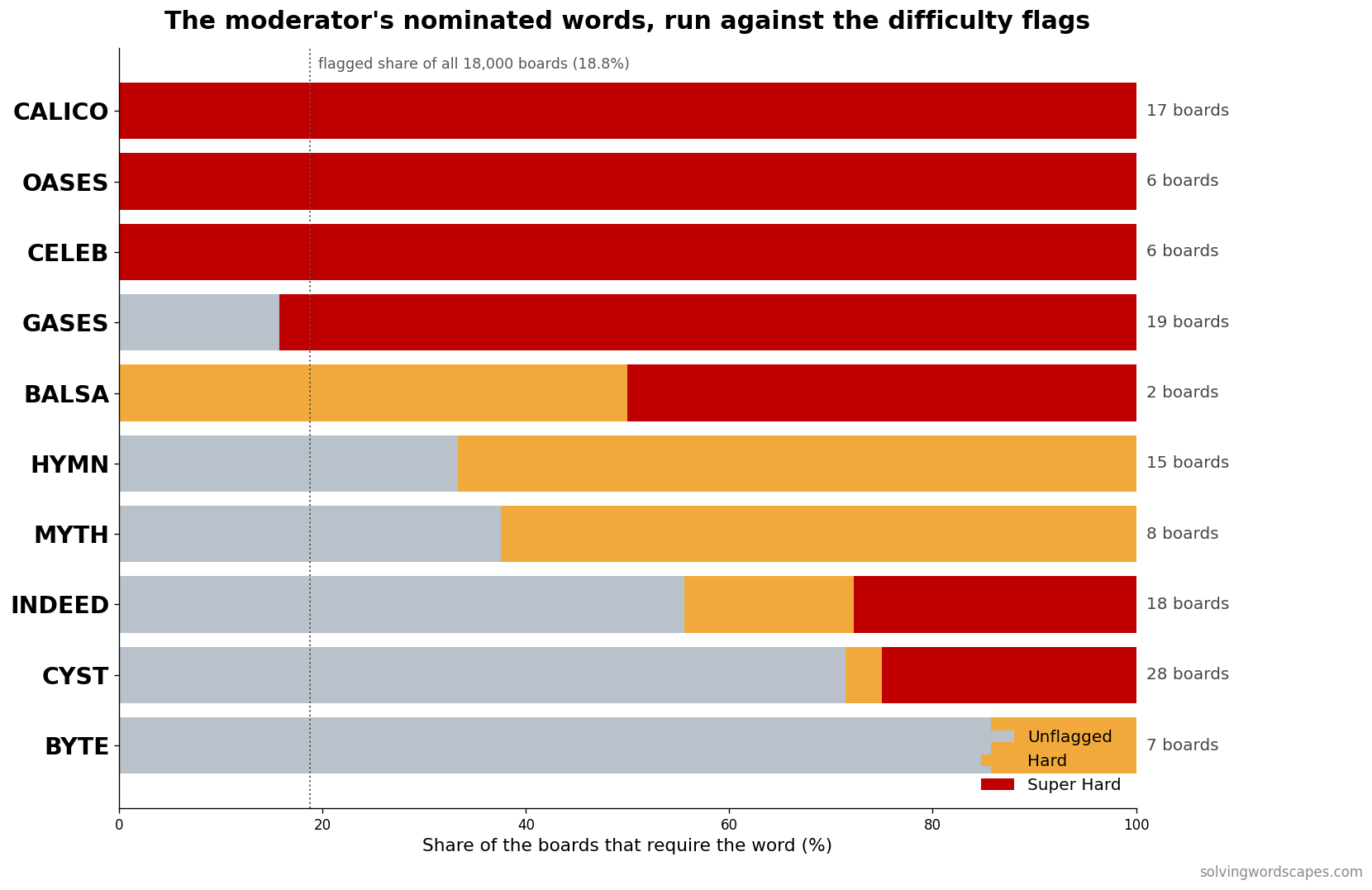
The first picks are not just above average, they are off the chart. CALICO is the single most damning required word in the entire game: 17 boards, three different racks whose big answers are COMICAL, CONICAL and CALORIC, and all 17 flagged super hard. Nothing else in the dataset touches that. OASES is 6 for 6, always on the GASEOUS board, which cruelly demands GASES and OASES on the same grid. CELEB is 6 for 6, living on the DECIBEL board. GASES is super hard on 16 of its 19 boards, and BALSA is flagged on both of its two. A moderator reconstructed, from memory alone, a list of the most flag guaranteeing words in the game.
Here is what makes that humbling for my methodology. Six of those nine original words score as everyday vocabulary on the Zipf scale from earlier, above the 3.0 cutoff this study counts as obscure. GASES sits at 3.7, the same neighborhood as HYMN, firmly everyday territory. My frequency metric would never have flagged it. The players’ ears did, because the trap is not rarity, it is invisibility on a board: you type GAS, it lands, and your brain files that S away as done. The ES plural never comes. A word can be common in speech and still be a word nobody thinks to swipe.
The Y hypothesis came back with a twist. As a letter, Y leans easy: 16.7% of easy boards contain one against 14.4% of super hard boards, and the full family of words where Y is the only vowel leans easy too, because most of them are SLY, FLY and TRY. Restrict it to words of four letters or more, the HYMN, MYTH, CYST, SPRY, GYMS, SYNC kind, and the picture flips: those sit on 85 boards flagged at exactly double the game average. HYMN is hard on 10 of its 15 boards and MYTH on 5 of 8, though neither ever reaches super hard, and BYTE is the one nomination the data rejects, easy on 6 of its 7 boards. It is not the letter Y that hurts. It is Y doing a vowel’s job in a word long enough to hide it.
Her last nomination, INDEED, turned out to be the strangest of all. INDEED and DENIED are anagrams, and the game never splits the twins: all 18 boards that use one require both, and neither ever appears as a mere bonus. The pair alone flags nothing. The seventh letter decides everything: add an X and the INDEXED boards come out hard all 3 times, add a W and the exact same letters run easy on 9 WIDENED boards and super hard on 5 others. Same rack, different trap: the 497 flag switching racks from the master section, caught in the act.
Her word count claim holds too. At equal rack size, easy boards average 11.7 required words, super hard ones 13.3, and hard boards actually carry slightly more than super hard. The count feeds Brilliance, not the flag.
That exchange pushed me to fix a blind spot in the study itself. Everything above compares easy boards against super hard ones, with hard lumped somewhere in between. Split the three classes properly and the answer to what separates Hard from Super Hard turns out to be: almost nothing, and that is the finding. The two flags are the same recipe at two doses.
| Ingredient | Easy | Hard | Super Hard |
|---|---|---|---|
| 7 letter racks | 36.4% | 67.1% | 78.6% |
| Vowel share of the rack | 36.8% | 38.5% | 41.4% |
| Racks with a duplicated letter | 67.4% | 69.4% | 75.2% |
| Bonus words per board | 4.9 | 6.2 | 6.5 |
| Rare required words per board | 1.7 | 2.2 | 2.5 |
| Boards demanding 3+ rare words | 22.9% | 40.1% | 45.1% |
| Required words per board | 11.4 | 13.3 | 13.2 |
Every ingredient climbs step by step, except one. Required words per board is the flat line of the table, 13.3 on hard against 13.2 on super hard, which is exactly the moderator’s point: word count is a Brilliance number, not a difficulty number.
The letters are where the three way split gets fun.
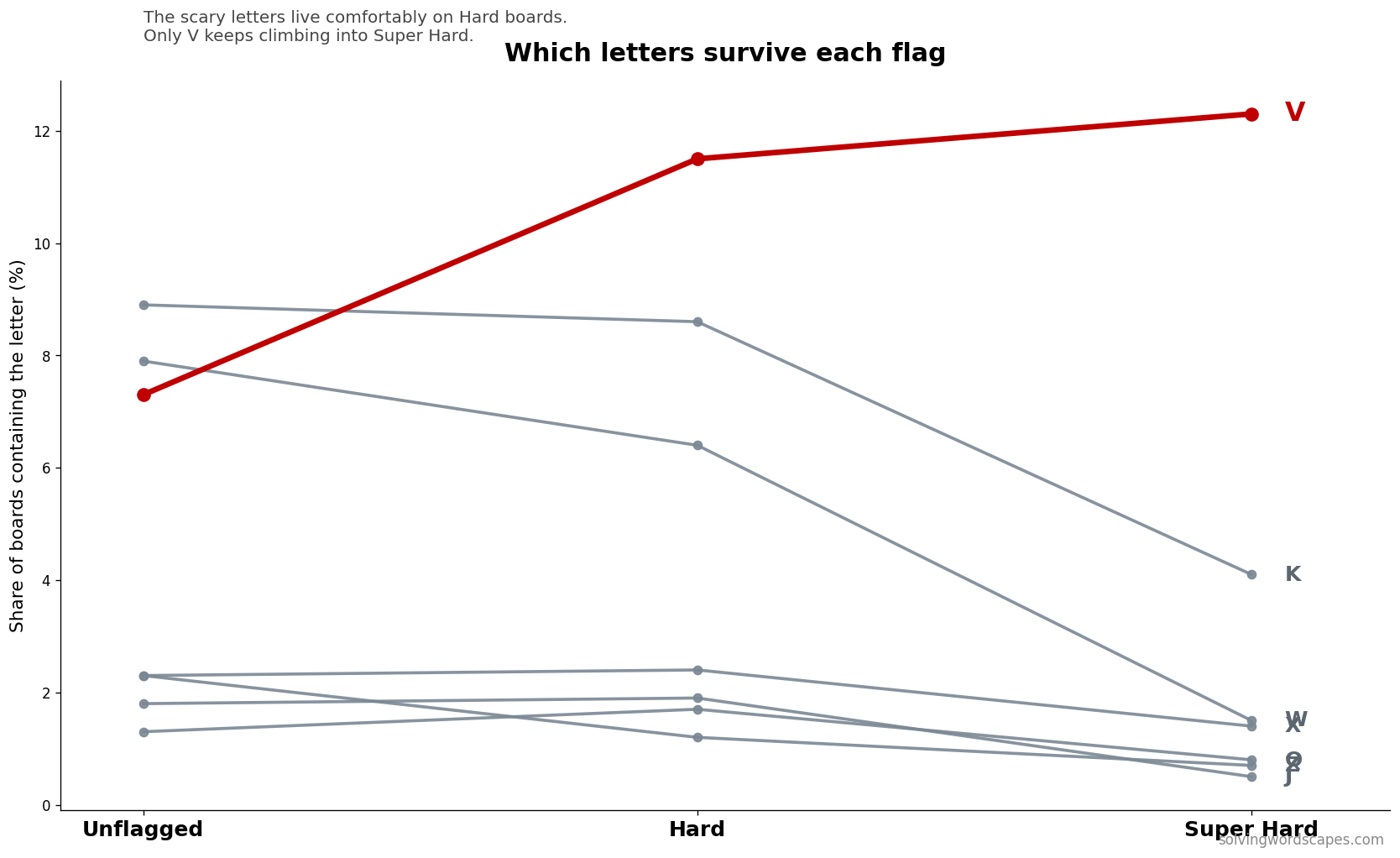
The scary letters turn out to be perfectly at home on hard boards. Q, J and X even appear slightly more often on hard boards than on easy ones. They just almost never survive to super hard: J drops from 1.9% of hard boards to 0.5% of super hard, K from 8.6% to 4.1%, W from 6.4% to 1.5%. A J can carry a board to hard, but once JUICE lands, the board unlocks. The letter that climbs the moment a board is flagged at all, and keeps climbing, is V: 7.3% of easy boards, 11.5% of hard, 12.3% of super hard.
Running her words also sent me back through the recycled boards, and the re-audit caught an error in my own study. DEVIOUS, my poster child above, ships in two shuffle orders: the one I had found, ten appearances, all super hard, and a sibling order with a different layout, five more appearances, all hard. Fifteen showings, never easy, still remarkable, and still not the record. The real most recycled super hard board in Wordscapes is CHRONIC: 18 appearances across three different layouts, super hard at every single one, with its main journey home at level 796, inside the Desert wall. The most chronically super hard board in the game literally spells CHRONIC. Behind it, CINEMA at 17 for 17, IVORIES at 14 for 14, TEENAGE at 13 for 13. The master levels section above has been corrected accordingly.
Moderator u/DisillusionedPie then asked the sharpest question of the thread, pointing to u/OCCobblepot’s January 2026 post on the frequency of hard and super hard puzzles, which had left the impression there is no set list of flagged levels shared by all players. The data splits that cleanly in two. The flag is a property of the exact board: the 18,000 slots in the catalog are built from 6,000 distinct boards, and the same board carries the same flag everywhere it appears, zero exceptions. But which boards you are served stops being shared once you pass level 6,000. Every master board is a verbatim copy of a main board, and the two master catalogs are two different playlists: version 1 reshuffles 1,803 distinct mains across its 6,000 slots, version 2 draws on just 1,265. They disagree on difficulty at 1,716 master numbers, including the 580 above where one install shows super hard and the other shows no banner at all. Version 1 runs 16.4% flagged overall, version 2 runs 22.1%, and both swing hard locally, version 2 ranging from 6 flags per hundred levels all the way to 39. So both impressions were right. The list is set. Which list you get is not.
One more community detail sbelongs in the record. u/SMothra57 remembers that the game had no difficulty designations at all in its early years; they were added later. That slots exactly into the fossil reading from earlier: a catalog that was already live, measured once against how players actually struggled, then frozen with the flags baked in.
My thanks to the r/wordscapes moderator team for pressure testing this study, they brought years of pattern recognition, and the article is more accurate than it was a week ago.
Methodology and data
Difficulty flags, letter racks, required words and bonus words come from the game’s own level definition data, covering the full catalog of 6,000 main levels and 6,000 master levels (both versions) as of mid 2026. Word obscurity was scored with the open source wordfreq dataset on the Zipf frequency scale, with required words below Zipf 3.0 counted as obscure. Search interest comes from Google Trends related queries for “wordscapes puzzle”, United States, July 26 to August 2, 2026, a public list anyone can reproduce. Percentages are computed over all 18,000 boards unless a section says otherwise. Nothing here uses hints, timers or any data about individual players. The community findings section reports checks run in August 2026 on words and observations contributed by the r/wordscapes moderator team; every number in it comes from the same level data as the rest of the study.
Update : Every notorious board named in this study is now playable: you can train on these exact grids in the Wordscapes Hard Level Trainer and feel each trap for yourself for faster gameplay in the future.
That is the study. The flags are eight years old, the game has never explained them, and they still line up with how people play today. If you spot something the data missed, or a level you think deserved a flag and never got one, tell me. I have all 18,000 boards open in front of me, and honestly, I am not done poking at them.